
Personal Development
Mastering Difficult Conversations: Communication techniques for respect and influence
Public Speaking and Communication with Richard Greene
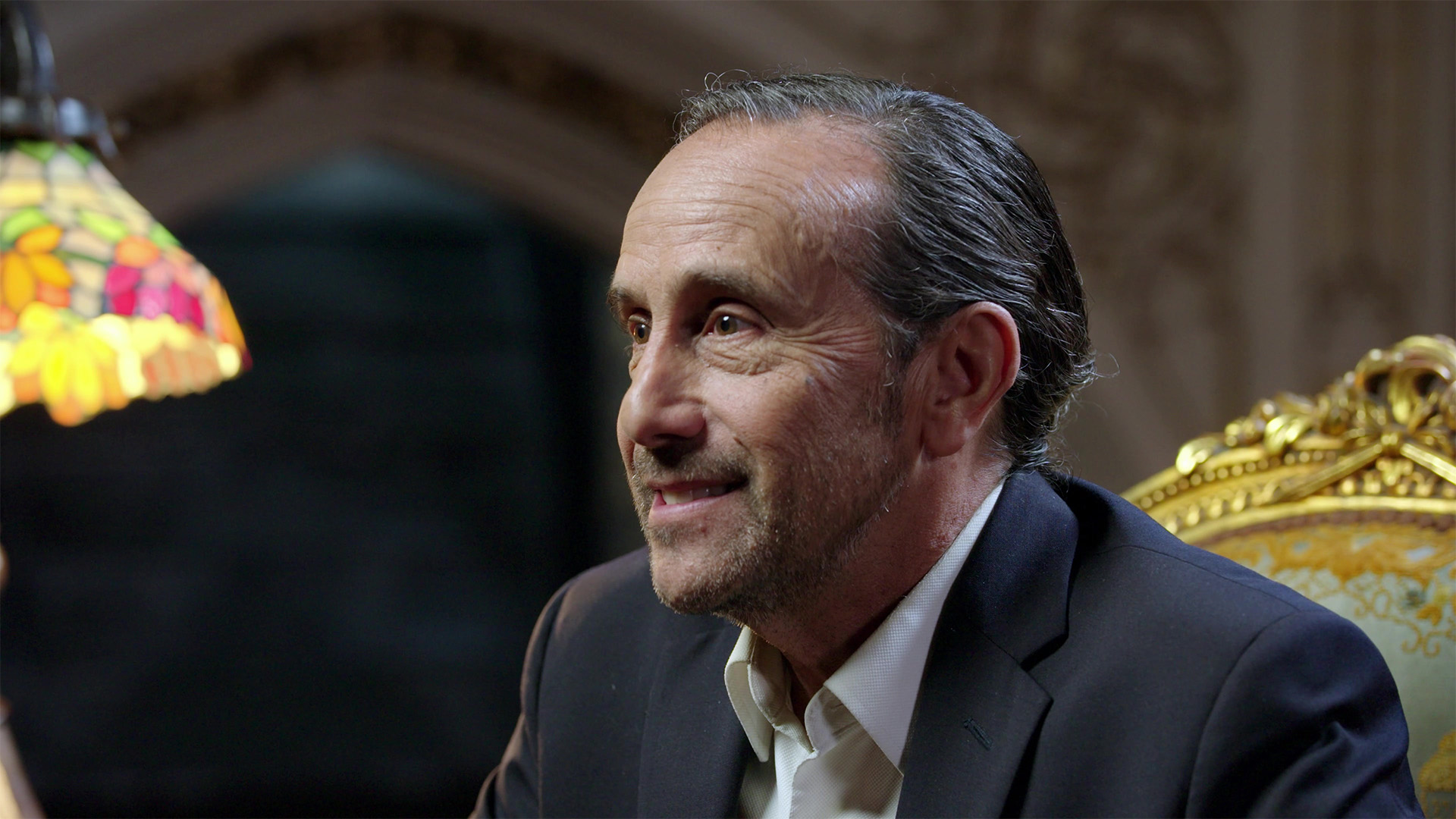
Richard Greene shares proven techniques to handle conflict, deliver bad news, and influence with respect while keeping conversations productive
Difficult conversations
From delivering bad news to conversing with angry people, Richard’s techniques will help to smooth the conversation and move forward positively.
Lesson
Captions available
Duration
21 minutes
Course notes PDF
Maestro
Rating
Explore lesson transcript
There's always going to be difficult challenging communication situations. And I want to give you three techniques that work incredibly well to get you out of hot water. So, number one is, "How do you give bad news?" You have to fire someone, you have to reprimand somebody. You have to give bad news to a friend. There's something called the Sandwich Technique. So, the yummy bread is the positive. Then the meat is the hard stuff to communicate, the negative news. And then the other part of the sandwich, the other piece of yummy bread. So, you start off by saying something really positive. It's like, "You are an incredibly talented worker... incredibly talented person, a hard worker. You're super intelligent." So, that's the positive stuff. Let's say you have to fire somebody, right? "And the board has told us that we need to cut back... significantly cut back on our employee workforce. And so we're going to have to let you go." Then the other positive is... "I want to be there for you. I want to support you. I'm happy to write a letter. I'm happy to help you get a job that's as good or even better because you're so talented and I so appreciate everything that you've done to support me and the company." It's still going to sting, it's still going to hurt. You've just fired somebody. Or, let's say, the company... You have to talk to the board. And the company has had a really disappointing third quarter. And you now have to go... You're the CFO, the CEO and you have to go tell the board, right? You start off and you say "We've done some amazing things in adjusting to the pandemic. And we've done this and this and this..." That's all positive. "...and despite all of our short-term efforts we were 15% below our target for our revenue this quarter. And I want you to know that we're learning from it. And I believe that because of this unfortunate result for this quarter we're able to make adjustments. And we are making the following adjustments. "Boom, boom, boom." So, that no matter what happens even if the pandemic resurfaces or inflation goes even higher or whatever we're really well positioned to take care of that and to thrive in it or at least not to lose any more ground." The most important thing, whether you're using the Sandwich Technique or anything else that I'm going to share with you in this lesson, is honesty. And you can't lie. You can't lie. And one of the ways that happens is if you're asked a question and you don't know the answer to it, don't risk your credibility by guessing and BS-ing an answer. Politicians do that all the time. Business people do that all the time. Because they feel like they have to be freakin' omnipotent and know everything, and you don't know everything. And one of the best answers that you could possibly give, and I've seen it being given by really great communicators all the time, whether they're politicians or CEOs or whatever, is, "You know, I don't know." The words "I don't know", those three simple words, can get you out of so much hot water. Because it shows that what you do say, you do know. And it doesn't build in a discount factor where it's like, "Oh, he's BS-ing on this. Maybe he's BS-ing on that." It's like, "No. I'm sorry. I don't know. I'll get back to you on that." Or you could even admit, "You know what? I probably should know that, but I don't." When I was working for some very big financial services firms, and especially the young people in the firm were very concerned that they didn't know something. And so they overextended their knowledge and they hurt their credibility. The best answer if you're working with a team of people and someone asks you a question you can't answer is, "You know what? That's not my area of expertise. I honestly don't know that. But the good news is we have one of the world's leading experts on value investing," or whatever it is. "I'd be happy to connect you with so-and-so... my partner or my boss or my associate, so-and-so." Just don't bullshit. It never ever works in the medium term or long term, even though it might feel like it's working in the short term. So, don't lie. Tell the truth. Be willing to say, "I don't know." Use the Sandwich Technique to deliver bad news. But another way to get out of trouble and to avoid trouble in the first place and to create an incredible bond is a technique which is one of the most powerful communication techniques in the world. It's called Pacing and Leading. Pacing and Leading. So, just like a pace car in an automobile race, you've got the pace car that sets the pace and everybody connects with that pace and then the flag comes down and they're off. So, Pacing and Leading would be, for example... if... Let's take a really, really hot topic. If I'm speaking about reproductive rights for women to a group of Christian evangelicals who are completely dedicated to banning abortions across the country, and I come in and I try to lecture them on how their belief that abortion is immoral and against the word of God, how successful am I going to be? I'm not going to be successful at all. So, that would be me trying to lead them without pacing them. If I first pace, which is similar to great listening and acknowledging someone and really fully being present with them and what they care about... if I paced that group, I would say, "You know what? I have to tell you I'm really also uncomfortable with the idea of a 12-week or 15-week or, you know, first trimester foetus being aborted. It's really uncomfortable to think about. It's really uncomfortable. And so I totally appreciate how you have that view. And we basically agree on that. And..." So, now comes the leading part. "...and I'm also really concerned about and trying to be respectful of people, especially women, who feel that it's their body and that they need to have autonomy and sovereignty over anything that's going on in their body. And I find it personally difficult as a man to support other men, politicians, telling a woman what she can and cannot do with her body. So, I think there are two very powerful emotional issues at stake here. And maybe we can find a way to work some sort of a compromise, respecting your very real, very important philosophical and religious views on this and finding a way to also support women and what they feel is extremely important and their rights to their own body." So, that would be an example. I'm not making you wrong. I'm pacing your belief by starting off saying, "I also feel that way. And I really understand that." One technique that is used to pace and lead, which again establishes a human connection where people can hear things in a whole different way, so important in high-conflict situations and issues in politics and in business, is something called the Agreement Frame. It's one of the most powerful, simple tools of communication that I've ever learned. The Agreement Frame starts with an agreement, starts with a connection, starts with an acknowledgment on a human level. Again, it's human connection that is the answer to almost everything. So, if someone says something, they say, "I think all abortions should be banned." OK. A natural reaction, "Well, you're full of it. You're interfering with the rights of women. You're senseless, you're an idiot, you're..." I mean, that's how arguments often happen, right? Those difficult communications. How effective is that? It's not. It's a waste of time. People get pissed off. And you destroy bridges that can be there in a very important way to build relationships. So, instead of saying that, say, "You know what? I appreciate... I really appreciate how strongly you feel about the rights of the unborn. I really do. And..." And then you go on and you talk. So, these are just techniques that incorporate the Pacing and Leading principle and technique as well. So, "I appreciate... blah, blah, blah. I appreciate that point of view. I appreciate how strongly you feel. I appreciate how passionately you feel. I appreciate all the experience that you've had in that field. And..." You don't want to say the word "but" because if you say the word "but" that discounts the acknowledgment that you just gave. It destroys all the goodwill that you're trying to build. So, you have three options in the Agreement Frame. And you can see it in the course notes. All of this is really outlined in the course notes as well because it's important and I know I'm giving you a lot of data. So, "I appreciate and..." "I respect and..." "I really respect your point of view. I really respect you and how deeply you feel about this." Now, I mean, I'm pacing them. We're connecting, we're on the same page, same frequency, the same vibration before I then try to take them by the hand and lead them. Or, "I agree." You don't have to agree with all of it. "I agree with some of it. So, I totally agree that it's incredibly difficult to look at a picture of an aborted foetus." Or, "I agree that..." whatever it is that you might say. And then, "And..." You want to start by connecting. "I appreciate", "I respect", "I agree". "And", not "but". That's it. That's the Agreement Frame. Incredibly useful. If you use this simple tool, the Agreement Frame, you're not going to ever fight. You're not going to ever have a fight. You may have a disagreement. You may even have a passionate disagreement. But it's going to be respectful. Someone that I knew who was an amazing spiritual leader, Dr Joseph Lowery, had this phrase. He goes, "We can disagree without being disagreeable." And that's the goal of the Agreement Frame. You can disagree, but without being disagreeable. Just try to create consensus. Try. It's the only way. If you really want people to come to your point of view, it's the only way to do it. You can use this in sales, right? Someone says, "Yeah, I'd like to buy that Tesla... HE CHUCKLES ...but it's too expensive." And you can say... Or, "I'd like to buy that Tesla but what about the mining that goes on for lithium and all the kids that are used in this unfair way and they're taken advantage of to mine the lithium?" "OK, fine." So, you can say, "Yeah, you're an idiot. Climate change is far more important than how we mine lithium, go to hell. And you need to buy an electric car." How many times have we heard that kind of argument? People get very defensive, very strident. It'd be great, because it's cathartic. It might feel good, but it doesn't work. So, instead you would say, "I appreciate how challenging the mining is for batteries and how much of an impact that batteries have on the environment. And... if you factor in everything, electric cars are still significantly better than internal combustion cars. And they are the future." So, now you're not disagreeing. Or, "I respect your view about the mining of lithium and the downsides of electric cars." Or, "I agree, I agree. The mining of lithium is an issue. And... as we move forward, I am certain that we're going to find even more sustainable solutions to the sourcing of materials for batteries." You never have to fight if you use this simple tool called the Agreement Frame. Difficult communications are always going to happen. But if you focus on learning these three incredibly valuable techniques, the Sandwich Technique for giving bad news, the Pacing and Leading process where you can bond with someone, and the Agreement Frame, I promise you that you can massively reduce the difficulty of difficult communications and maybe even forge relationships and cooperation that you never thought possible. What do you do if you're speaking and people are speaking in the audience? They're whispering to each other. They're talking out loud. They're disturbing you. There's a not very nice technique but an incredibly effective technique that I use that works almost all the time. I... shut... up. So, if people are talking, I go, "Oh, OK. Clearly what you have to say to each other is incredibly important. I'm gonna respect that. I'm here for you." It's all about them. It's all about the audience. "And I'm just going to stop talking. And I'm going to be very direct about why I'm stopping talking without saying anything. I'm just going to look in your direction and I'm going to wait until you finish." You don't have to say anything. "Shut up. This is really rude. I thought you came here to learn. Why are you disrespecting me?" Or whatever. Just pause, stop. Look at the people that are side-talking or talking out loud to each other. And just say, "Oh, no. Go ahead. That's fine. If you have something you need to talk about, I can wait" if they ask you what's going on. But just pausing. Because what's going to happen when you shut up is their silent talking is now going to become very obvious. And everybody in the entire room is going to now look at them disapprovingly for the most part. And it's incredible how quickly it resolves. And then they don't do it again. I told the story about Princess Diana dealing with a heckler in New York. It gives an opportunity for my command of the room to be highlighted and to even be increased. So, if someone heckles me... It doesn't happen very often. Or they ask a really... "But what about this?" I'll pause, and I will not ignore it. Don't ignore it because it's the elephant in the room. Everyone knows it just happened. You have to keep control and take control and then move beyond it. If someone says, "You're full of crap. Blah, blah!" I go, "OK." Then I'll be very respectful and I'll say... "Tell me more. Excuse me, one second. Someone obviously has something that's very important and I want to honour that. So, tell me more about that." Again, it comes back to, "I'm listening." I'm taking the energy out of that conflict situation. And then it goes away. Or let's say somebody says something... "You're full of crap," or whatever. Or, "This is BS." And they storm out of the room. Do I ignore that it happened? Of course not. It's so obvious. I go, "Wow. That was interesting. Somebody has some very strong, passionate feelings. Anybody else? Anybody want to say anything? Anybody want to comment?" Boom. And then you move forward. It's Pacing... and Leading. Because something happened. You're now connecting with that something that happened. You're not ignoring it, not pushing it away. And then you're leading people back to where you want to lead them. Super simple technique. There's one more technique I want to share with you which is incredible. I call it the Sponge Technique. Have you ever tried to have a conversation with somebody and they just keep going and they won't let go of their position and they're angry and they're frustrated and they're anxious and they just keep trying to vent? What's the normal thing? They throw the ball at you and you go, "But that's not true." You throw it back and they throw it to you and, "Yes, it is. Blah, blah, blah, blah." If someone has a lot of emotional energy, a lot of anger, a lot of anxiety, a lot of oomph behind something they're passionately feeling, the very, very, very quickest and best and most cost-effective and time-efficient way to deal with that is to just listen. Similar to the way that I talked about Bill Clinton listening, full-body listening, 100% there, no Ready To Pounce. You are a sponge. You are a tabula rasa blank-slate sponge and you just absorb it. So, if someone's super angry, even out of control, even hostile, and you just stand your ground and you let them vent at you and you just absorb it. You take it in your front, you can squeeze it out the back. But just stay centred. Keep taking it. The Sponge Technique. They stop for a second and you say, "Is there anything else?" You don't even respond. Your job is to empty them out completely. It works every time. In family situations and in work situations. It cannot not work. And they slow down for a little bit or there's a pause. You say, "Is there anything else you want to share?" And you say it honestly and genuinely. And they go, "Yeah! Also, blah, blah, blah." And you keep taking it. Take it in one end of the sponge. You can squeeze it out the other. And then I promise you something magical happens at the end of this process. So, you might have to say, "Anything more?" two or three or four times. And then you'll know when they're empty. You'll know when you've emptied them out of all of the anger and frustration and whatever it is they are trying to get rid of. Nine times out of ten, they're going to go... HE EXHALES Once they've emptied out, they then take a big sigh and they breathe out and then you know they're empty. And then you do the Leading Technique and you go, "So, what would you like to do now?" Or, "What would you like to talk about now?" Or, "How would you like to proceed?" You don't rehash the back, the part you just did. You don't go back. You don't rehash that. You've emptied them out and now you can move forward. It won't take more than 30, 45, or 60 seconds maximum. Instead of fighting it, instead of debating with them, instead of throwing it back, instead of trying to prove they're wrong and you're right. If someone's out of control... be their therapist. Take all that uncomfortable energy out of them. HE EXHALES Absorb it. Be the bigger person. Hold your ground. Let it go however you need to, silently. And then move on. That's called the Sponge Technique. So, honestly, any one of these techniques that we've talked about are unbelievably valuable. If you can master all four of them, you will be a master at instantly diffusing difficult situations both at home and in the workplace.
What you'll learn
Join Richard as he breaks down the art of public speaking into actionable steps and game-changing techniques – soon you'll have all the skills to win over any room.
- Conquer your fear and say goodbye to imposter syndrome
- Create impact with tone, pace and volume
- Craft a compelling message
- Adapt your delivery for your audience
- Connect through storytelling
- Master body language

Dubbed "The Master of Charisma" by The Sunday Times, Richard Greene has coached thousands of people across 35+ years and counting. Everyone from members of the political elite and Princess Diana to Walt Disney Company leaders. After working with Tony Robbins to help him launch his career in the mid-80s, Richard left his law practice to help others overcome one of modern life’s greatest fears: public speaking. This passion has taken Richard all over the world in a mix of capacities, such as delivering lectures, workshops, and speeches like his popular TED Talk, ‘The 7 Secrets of The Greatest Speakers in History’, and writing books like the prestigious ‘Words That Shook the World’.
Common Questions
-
What is the Sandwich Technique for delivering bad news
Open with a positive, share the difficult news clearly, then close with support or encouragement to maintain trust and respect
-
How can pacing and leading improve difficult conversations
Match the other person’s pace and perspective before guiding them toward your viewpoint to increase influence and reduce resistance
-
What is the Agreement Frame and why is it effective
Start with phrases like 'I appreciate', 'I respect' or 'I agree', follow with 'and' instead of 'but', to keep discussions respectful and constructive
-
How does the Sponge Technique defuse anger
Listen fully without interrupting, ask 'Is there anything else?', let them empty their frustrations, then guide the discussion toward solutions
-
How do I disagree without damaging relationships
Acknowledge differing views, avoid personal attacks, keep tone calm, and use techniques like Agreement Frame to maintain mutual respect
-
How should I handle interruptions or hecklers while speaking
Stay composed, make eye contact, pause strategically, and address disruptions directly but respectfully to keep authority and audience focus