Writing
Master storytelling techniques
Magical Storytelling with Isabel Allende
Learn plot and story structure with Isabel Allende. Discover outlines, character-driven plots, and creative formats to shape your narrative.
Find your plot and structure
How to use an outline, characters and genre to help you navigate your story.
Lesson
Captions available
Duration
19 minutes
Course notes PDF
Maestro
Rating
Explore lesson transcript
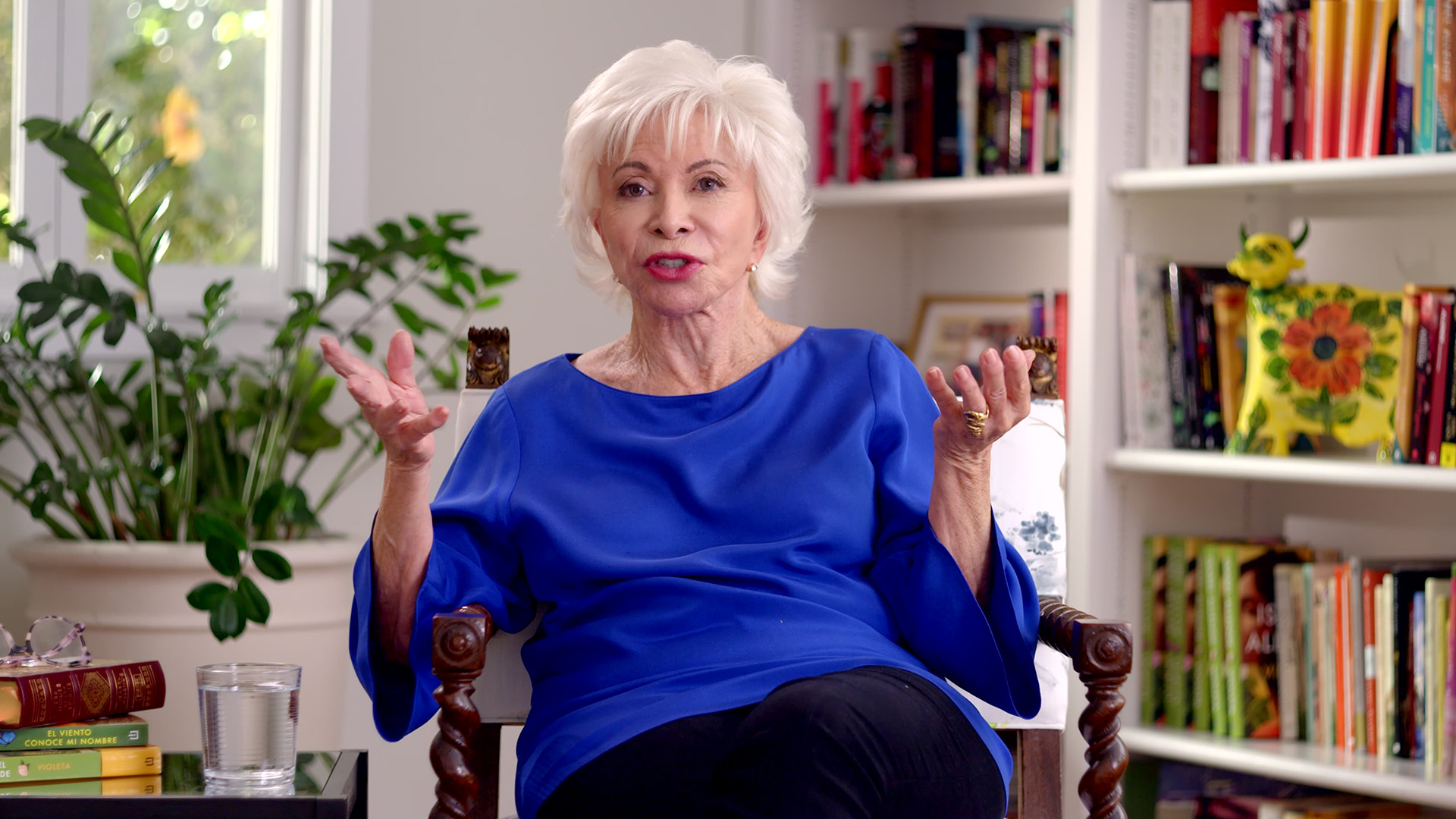
Hola, my friend. How are we doing with the writing? I hope you have written something by now and that you feel enthusiastic about what you are going to write next. In this lesson, we are going to talk about plot. Plot, of course, is your story. So it is essential. It's the most important part of your writing. What is the story about? What are you going to tell? Sometimes you know, and sometimes you don't. It doesn't matter. There are writers that plot everything ahead. And they can have an outline, a script that is 30 pages long, 40 pages long and they discuss this outline with the agent, with the editor, with friends, with a group of other writers that they may have a community with, whatever. I don't work that way. I can't. First of all, I write in Spanish in an English-speaking country so I don't have a community of fellow writers in Spanish to discuss my book with. And I wouldn't, even if I had it. I'm very private about what I write. I don't discuss what I am writing with anybody, not with my mother, or my agent, or my editor. When my first draft, and I think it's a good draft, is finished, then I share it with very few people. And during the process of writing I ask, sometimes, my brother, whom I adore, and he's a scholar and a researcher. I ask him to help me with certain things but I don't tell him the story, I don't tell him the plot. I can ask him particular questions. Now, I think that if you want to feel safer as a writer, it is a very good thing to have an outline. And once you have the outline, if the outline is with enough detail, you will have like a blueprint to tell the story. And you won't be stumbling in dead ends and in places where you get stuck and you don't know how to continue because you already have a guide. It's good to have a couple of readers, people you trust, people who know about books. Not just your mum, someone who is a good reader with whom you can share the plot and you can talk about it. And you can even share your outline. And if you are not published, you don't have an editor yet and you don't have an agent, that will help you in the process. But then what happens with the writing of a book, if you are accepted by an agent and the agent sells your manuscript to a publishing house, you will be assigned an editor. And then you have to start building a relationship with that editor, because he is your alter ego. He is the person who will know everything about your book. And if it's a good editor, it's a fantastic help and a wonderful mentor. I write in Spanish and the book gets translated into English. And my American editor, Jennifer Hershey, reads the manuscript for the first time in English and she has things to say about it. For example, in my latest book, she didn't like the ending. She couldn't suggest a new ending because that was my job, but she didn't like the ending. It was unsatisfactory for her and therefore for the reader. And so, I had not sent my Spanish version to Spain yet. I could correct the Spanish accordingly. So I first worked on the English edition and then I moved all those comments or those changes into my Spanish manuscript. You will not have to have any of these problems. You work in English mostly, or in one language, and with your editor you will adjust the story many times. And it's very good feedback. It's very good to have that person. Other people attend workshops and this is something that my students have done and it's very good. Workshops, I recommend. Classes, I recommend. And then work. Work, work, work, and error. Trial and error, as much as needed. And then by the end remember that everything can be corrected. You don't have to write the first perfect plot and the first perfect outline immediately. You might have an outline and in the process of writing you realise it's not working, that there is something that is not working either because it's not consistent with your character or because there's a point when the story seems flat. Nothing is happening, it's not interesting. So how do you carry your protagonist from here to there if, in the middle, you don't have anything? So have your outline. It's not carved in stone. You can change it, you can change it before and you can change it in the process of writing. Plot is the story but the story happens to your main characters. So, character and plot go hand in hand. And you cannot have characters that do, in the plot, things that are inconsistent with who they are. So it is related, closely related. And your secondary characters that will come to help move the plot also have to be related somehow to your main line, to your main storyline. When you create a plot, often, by developing the characters, the plot changes. Because you realise that that character could not be doing that thing in particular or would do it differently. Follow your instinct. Listen to your character. Don't stick to the outline. You did the outline, you can change it. So listen to your character and your character will tell you if the plot is working or not and how you can redirect the plot so that it is consistent with the characters and it's still a good plot. This idea of plot depends also on genre because if you are writing a mystery, the outline is essential. And of course, you need very strong characters that the reader can engage to those characters. But really, the plot is essential. You want a crime and you want the investigation of the crime and the resolution. So that is, you might say, formulaic, but if you are a good writer, it doesn't have to be a formula. But obviously there, the plot is very important. If you have a literary novel that is very contained, let's say a psychological thriller of some kind, then the plot is not so important. What is important is what happens to the characters. Because it's their insights, it's their actions, it's their motivations, their reactions, what will carry the story, not the plot. They can be sitting in a kitchen talking and there's no other plot than that. The plot is in the dialogue, the plot is somewhere else. So be flexible with the idea of plot and stick to your genre. If you are writing a romance novel, it's a love story. It's always a love and sex story and it always has a happy ending. Even if it's not obviously happy, it has to be some kind of redemption at the end. So again, in a love story, it's the relationship between the characters that is important, and the plot sustains it. But it's minimal. I think it's called Bridgerton, something, a series on TV in which it's always the same thing. It's two people that fall in love at a ball. That's it. There's no plot. Are they... Why do they love each other? Why do they like each other, what dresses are they wearing? But there's no plot. And yet, it works. It works because it's a love story and because of the characters and because of the setting, it's very important. The gowns, the ball, the palaces, all that is really important. It's what makes the story. So it depends on the genre. In a thriller, you need a very good, solid plot because that's what the book is about. In a historical novel, the plot is determined by the event that you are going to write about. If I'm going to write about the civil war in Chile, that is my plot, and I have to get there somehow. I have to create a plot from the very beginning to get my protagonist there. But I know that that's what I'm going to tell. So I have to get there. And my plot will be determined by that event at that moment, in that place. There are masters of plot, like Shakespeare. And with plots like that, really, the characters are important because they have some passions that are important to you. But the plot is essential. How many young teenagers fall in love? A million per second, in the universe. But Romeo and Juliet are willing to die and their families are separated by hatred and the time when they are living, and all that... All that's plot. Plot makes these two teenagers that are just two common teenagers, be the symbols of young love forever, 500 years later. A wonderful plot. Without them dying, without them dying for love there's no plot that is really memorable. So plot is important and it has to be consistent and related to the characters. So your exercise now is write a plot in two pages using the character that you investigated before. When we talked about building character, how you create a character, and we had an exercise in looking for a person that you like or you don't or whatever, and write two paragraphs about that person that makes that person distinct in a way. Now put that person in a plot and be consistent between the person you have chosen and the characteristics of that person and the plot you are developing. What happens to that person, when and where? And you have your plot. Structure in a human body is the bones. The skeleton that supports us. In a story, in literature, structure is how you are going to organise your material. What kind of frame it will have so that it will stand by itself. And in Western literature, the classic structure is a beginning in which you introduce the characters, and the setting, and everything. There is a development, something that happens to these people, and a climax when things reach a point of change, or of no return, or a point of a spectacular thing that happens to them, and that's the climax. And then, the story winds down to the ending, which is the resolution. That's the usual trip that the writer has to do with the story. But that can happen within different frames. It can happen, for example, in chronological order, which for me is the easiest. I begin a story at the beginning and I develop my characters and the circumstances and then I move the action. And then there is a climax, which happens chronologically. And then there is a denouement or a final event that is the end of the book. For me, that's easy because it's simple and I recommend it if you are starting. There are other forms of other structures that can also work. For example, I think of a spiral. A story that begins, and then goes back to the beginning and then, a leap and something else happens, and goes back... And it goes like a spiral. Retelling and telling. There is the circular structure, in which you begin, you develop, you do all your story, and then you go back to the beginning. *The House of the Spirits* — I didn't know this when I started writing. I knew nothing about structure, plot, characters, tone, narrative voice, nothing. Absolutely. I was writing a letter. But I wrote a first sentence, that is "Barrabás came to us by sea." And the book ends with the same sentence because the person who is narrating is looking at the notes or the writings of her grandmother. And the writings of her grandmother begin with that sentence. And so when she opens the book, the notebooks at the end, that is the first sentence that ends the book. So that would be like a circular narration. And I remember that, when I went to Spain for the launching of the book, as I said, I knew nothing of the book industry. And I was introduced to the intelligentsia in Madrid and it was this incredible party and I was just lost there. And then I got the first interview from a reviewer in Spain, who said, "Can you explain the circular structure of your novel?" I had no idea what the heck he was talking about. To me, "structure" was a building and "cyclic" was menstruation. I didn't know what this was. Now I know a little bit more, but I don't plan it ahead. In chronological order, you don't need to plan it. If you are thinking of a more elaborate or different structure, you better plan it, so that it works. There is also structure within fragments. You can have a completely fragmented story that you start with one thing and you jump to another, and to another. But you have to be able to put this together. At the end, it has to make sense. So in order to make these fragments work, you have to give enough information to the reader so that he or she can relate from one fragment to the other. Even if that fragment doesn't come immediately after the previous one. Even if you jump 50 pages, you have to be able to remember what happened, and what is the relationship. So this is a difficult way of writing and there are some people who are masters at it. In a fragmented structure, you can have as many flashbacks as you want. In a chronological order or structure, you can also have flashbacks but within the chronological evolution of the story. You don't have a flashback that is not connected to what is happening in that moment in the story. So, let's say that you have these people who are in a boat in a river and they are going with the current. And something is happening to them. They are talking in the boat. You can have a flashback to what happened to them in their childhood, and then go back to the boat. That you can do, and your reader will not get lost. In a fragmented structure, you probably have to be very careful with flashbacks because they might get lost in the fragments, unless you are skilled. So please start simple and then we will find ways of getting into more elaborate forms or structure. And remember, beginning, middle and end. That's it. Remember that now, you have a character and you have a plot. You have a setting, you know where, you know when it's happening. Tell that story in chronological order. So what happened to the character from the beginning to the end. Now, let's do this in a circular frame of work. You start with your character, whatever happened to that character, carry that character through the story, and then let that character go back to the starting point, to where it began. The character's childhood, for example. I'm just thinking. Anything. And now fragment it. See if it's possible for you to fragment your story and fragment it by telling it also from different narrators, different points of view and mix them, and see how it works. It might work, it might not. It doesn't matter. It's an exercise and it's a very good exercise as training for what structure means and how you can manipulate it.
What you'll learn
Join Isabel to learn the craft of writing, be inspired by the art of her masterpieces, and weave together a narrative for the ages.
- Unlock your authentic writing voice
- Build your confidence as a writer
- Add extraordinary elements to your story
- Develop your writing routine
- Write characters, not caricatures
- For planners and instinctive writers
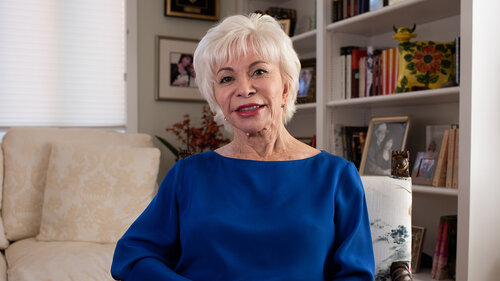
Isabel Allende is a literary legend known for her rich storytelling and blending of magical realism with historical narratives. She’s sold 80 million copies worldwide and had 20 New York Times bestsellers, starting with her debut novel, The House of the Spirits, which she wrote aged 40 in 1982. The critically acclaimed, multigenerational saga kicked off 40 years of hit books, including The Wind Knows My Name in 2023.
Common Questions
-
How do I start writing a book?
Begin with a character or idea that excites you. Isabel Allende suggests creating a flexible outline to guide your plot and keep you moving forward.
-
How can I overcome writer's block?
Experiment with structure, change perspective, or revisit your outline. Treat it as a guide, not a rulebook, and allow characters to lead the story.
-
What are the best tips for writing a strong plot?
Match plot to genre, keep it consistent with character motivations, and be willing to adapt your outline as your story develops.
-
How do I come up with story ideas?
Draw inspiration from personal experiences, history, or imagined scenarios. Let your characters’ personalities shape the events that unfold.
-
How should I start the first chapter of my book?
Introduce your main character and setting early. Establish tone, hint at conflict, and give the reader a reason to keep turning pages.
-
What makes a good story structure?
A good structure supports your plot and characters. Whether chronological, circular, or fragmented, it should be clear, cohesive, and engaging.