
Writing
Finding thriller ideas and mastering plot
Writing Thrillers with Harlan Coben
Unlock thriller ideas from real life, news and imagination, and learn to blend plot and character with Harlan Coben’s expert tips.
Inspiration: The idea
In this lesson, we’ll delve into the beginnings of the process of writing a thriller: the idea.
Lesson
Captions available
Duration
14 minutes
Course notes PDF
Maestro
Rating
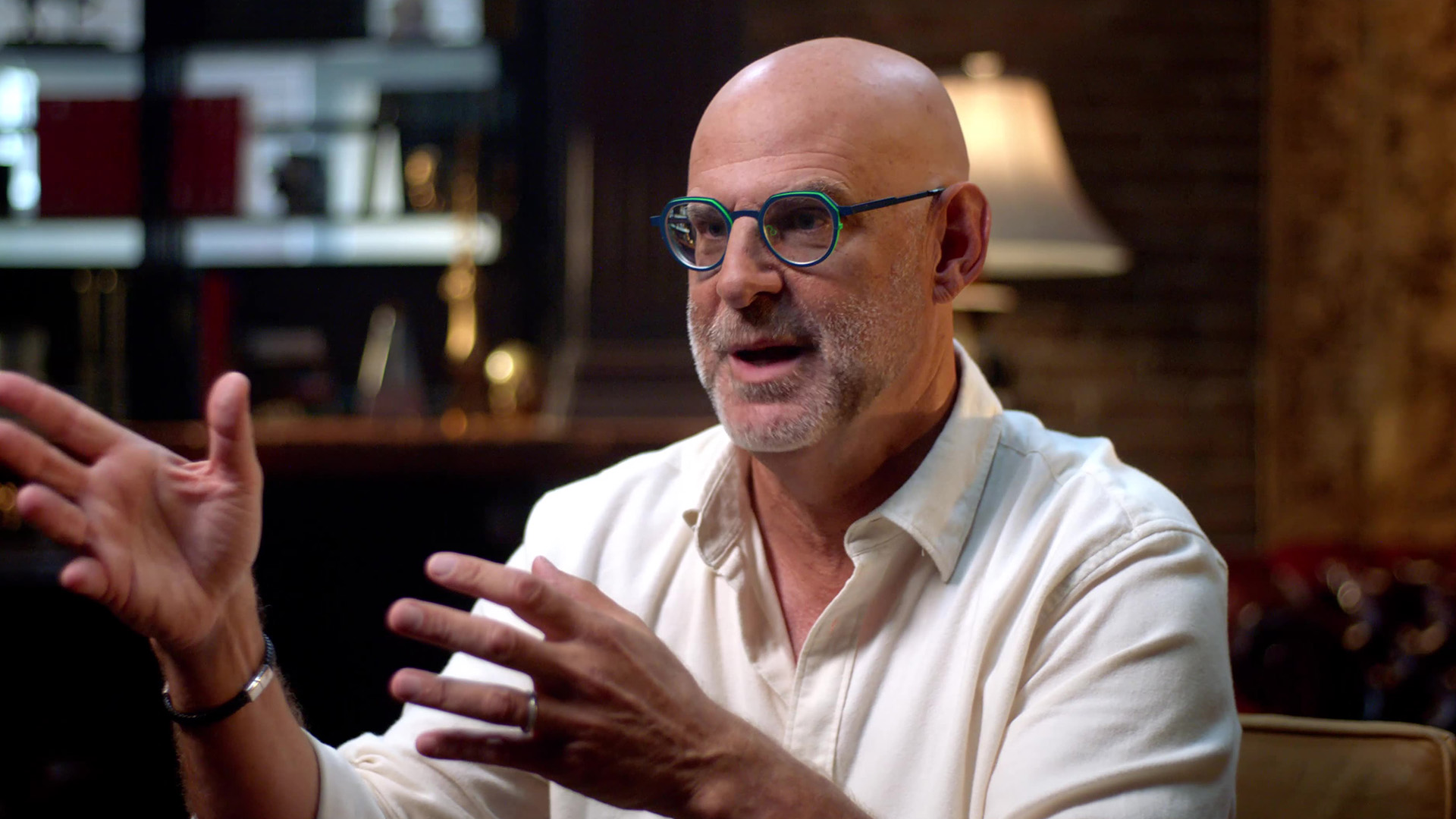
Explore lesson transcript
There's three things that make a writer. Inspiration perspiration and desperation. We'll get to all three. But I'm very excited to talk about inspiration because every other author kind of likes to ignore this. Every other author claims that he hates the question "Where do you get your ideas?" Like there's a boutique in the village that sells them. But the truth is that the idea is everything. Everyone always says, is it character or plot? Character versus plot. And most of the people that will teach you will tell you it's character. They're wrong. It's not character, it's plot. We'll go into it in a second. But character is plot. Plot is character. If I say to you, I have a great book or I have a great TV show I want you to watch the first question you ask me is not who's the lead character? What's their background? No. You want to know what the story is about. That's the idea. So let's face that one. You have to come up with a really good idea. You can pretend otherwise. You could start talking about "I have this really interesting character." If he's just going to stare at his navel for the whole book nobody cares. You have to put him through something interesting. Again, I'm being a little facetious here. They're equally important, character and plot. But what I'm going to try to get you to do is to think of them together. Character, plot, dialogue research, rewriting all of these things have to bleed into one another. They have to blend. I will talk about one during another because the idea is you keep being taught that they're separate. "Oh, now I'm going to work on my character. Now I'm going to work on my story. Now I'm going to work on my setting." No, that's going to throw you off. Don't do that. It's all one thing. So let's get down to basics. How have I come up with certain ideas and how can that help you come up with ideas in your own life? I'm going to show you four different ways that we can come up with ideas that can we can turn into novels or screenplays. Ideas come from several different places. I think mostly, again it's keeping your mind wide open. There are these little hooks in your brain and everything that goes through just goes through. And every once in a while, something gets stuck on that. I write that down quickly. A lot of them get stuck. I will have pages and pages especially when I'm trying to think of a book idea. It usually takes me about three months. A lot of those ideas will never come to fruition. I have saved them all and I read them all before I come up with a new book cos oftentimes, as we'll discuss later you'll take three or four or five different ideas and meld them and mould them together. So where do these ideas come from? They normally come right from my personal life. That's place one. I'll give you a couple very specific examples. I wrote a book a number of years ago called *Hold Tight.* I was out to dinner with friends of mine and they confessed to me that they were having issues with their teenage son. And so they put spyware on his computer so they could figure out what he's doing all day. And I'm thinking, of course. "Well, what if? What if I put spyware on my kid's computer and I got back a message that changed my life and now the kid disappears?" I'm like, "Whoa, this is really cool and what a cool topic to explore." So this became the little seed that eventually grew into *Hold Tight.* *Hold Tight,* it's about Adam and Tia. They put spyware on their 16-year-old son's computer because his best friend recently committed suicide. A very cryptic message comes in. Their son vanishes and they have to figure out what to do. So that's an idea of what I'm talking about. Another book I wrote called *Promise Me.* I overheard some teenagers who I love and adore were down in the basement of my house and I overheard them talking about drinking and driving. And I said, "Promise me..." which was the title of the book "...you won't do that. Here's my phone number. I don't care if it's three in the morning. I don't care what you're on. I'll come pick you up. I won't tell your parents. Just promise me you won't get in a car with someone who's been drinking, driving." Maybe some of you have made a similar promise. So that's the end of the story. Nothing else happened. They never actually called me. But fiction writing, what you're doing is asking "What if?" What if a teenage girl calls my hero? What if he goes into New York City and he picks her up at three in the morning and she tells him to drop her off at a house drops her off at the house, and the next day no one at the house even knows who she is and no one has seen her. What if? That's how *Promise Me* came about. Each book is something like that. Another book that I wrote a couple of years ago is called *The Boy From the Woods.* So, anything can get you an idea. This is what I mean. Keep your mind open. I was on a hike with my family. I hate hiking. I don't get it. I know we're all supposed to be into hiking now. I find it really boring. I'm like, there's a tree and there's another tree. Bring me to the city where I can look at... Let me go through a bookstore! Let me browse through a bookstore. Let me window shop. Let me see people's faces, all of that stuff. Yeah, I love all that. But the woods? I'm so bored. It's hot, there's mosquitoes, there's bugs and I'm walking like this and I'm ranting the way I'm ranting at you fine people right now. And my family is rolling their eyes. And then I see on a parallel path it's a boy about five or six years old walking completely by himself. And I start to think, "Well, what if? What if that boy came out of the woods right now and said, 'I've always lived in the woods. I've known no other life before that. I don't remember parents. I don't know how I ever got there. I break into cabins to feed myself or I find some food in the plants. And I've been this way my whole life.' And what if now 30 years pass and he still doesn't know how he ended up in those woods and now he gets a clue as to what really happened back there?" That's another way I've thought of a book idea. So even when I'm at my most miserable you can come up with book ideas. So sometimes the ideas come from your personal life and observations, and sometimes they come from what you read or what's going on in the news and things like that. So, for example, I wrote a book a few years ago called *The Stranger.* And the way I started *The Stranger* was I'd read an article about a woman who had faked her pregnancy by going to a website called something like fake-a-pregnancy.com or whatever and getting a fake belly, and I'm like "Wow, that's weird. What can I do with that?" So I came up with this idea where a stranger, as the book opens and as the TV series, if you saw it on Netflix, opens a woman comes up to our hero and says, "You know, your wife was never pregnant. She just faked it. She got a fake belly, she got a fake sonogram she got it all online and she just pretended." And I started to think about the fact that we have all of these secrets online, don't we? Suppose this stranger were dropping these kind of bombshells on everybody's life? Somebody else finds out that they were cheating, somebody else did revenge porn, whatever it is, they kept doing different things, and the stranger is dropping these bombs on people's life and how it's now going to affect them. So that's an example of where you're just getting it from articles that you're reading or real life. Another case was, I was really interested in all these DNA genealogy sites that are popping up all over the world and how they're changing, but how can I do something slightly different? So in a book called *Runaway* I took a girl who was missing, who had unfortunately got involved in drugs, and finds out something really shocking about herself on this DNA site. All the things that we see. I don't use cutting-edge technology. I'm not a big researcher. All the things that you see in my books are everyday things. This is the way of the world. If you're going on a date with somebody now you google their name. If you didn't, that's unrealistic. It would be like writing a book in the 1970s and not having a telephone. These are the things that we kind of exist and work with, so when you're seeing these things in the world, how can you take some of these new technologies and turn them into story? The third way I come up with ideas is I think of an image or a sentence or a word even and I challenge myself to find a story out of it. My book *No Second Chance*, the opening line is "When the first bullet hit my chest I thought of my daughter." I thought of the sentence. I was just like, "Wow, this is really cool. Why? Why am I thinking of my daughter? Where is my daughter? Who shot me?" And I started to tell the story right from that word. I didn't even think of the rest of the story yet. I just went from that. "When the first bullet hit my chest I thought of my daughter." In the book called *The Woods* he's out in the woods and he just sees his father. The first line is, "I see my father with that shovel and he's crying." Just had this image in my head, of my father out in the woods, digging and crying. "Wow, what kind of story can I make out of that? Why is he crying? What's he doing out there?" It starts off almost like a reading task or a writing task that I'm going to give you. But instead I want you to actually use that to start developing a book. Maybe that will become your book, maybe it won't. It'll be good for you either way. But try to start with something... just that image. Right away, we are already in the story. If I'm starting a book with the line "When the first bullet hits my chest I thought of my daughter" we're in the story, right? We're already there. So that's another way I've come up with an idea. And the last way, and probably the most useful and the most important way is that I combine ideas. I combine a bunch of things together. It's never really just one thing. I'll try to tell you how I came up with the idea for a book called *Tell No One.* And I think that's probably the best example of how it works because again, I'm making this seem a little simpler than it is. On the one hand, coming up with some of these thoughts is simple, but really it's trying to put it together because an idea is not a novel. An idea is not a full screenplay or TV series. It's the seed. So the first part of *Tell No One* was I was watching a really crummy romance movie on TV. And this is what I mean by anything can stimulate an idea. I'm watching a really bad romance movie on TV and it's one of those we've seen a million times where the wife dies in the beginning and the man can't go on with his life and then a hot actress walks by, and all of a sudden he's fine. Have you noticed that in these movies? So I ask myself, in those moments, I get serious. What about the man who can't go on? What about the man who's truly lost his soulmate? Is there some way I can find joy and redemption for this guy? I take this part of the idea and I have it over here. And the second part of the idea, and this is also what I mean about memoir, loss, your real life coming into play to inspire your work. I lost my parents at a fairly young age. They were both dead by the time they were my age. I miss them greatly. They never got to see their grandchildren. And one day I'm on the computer and I'm thinking about that, the same way we all do. Wouldn't it be great if my parents could have met their grandchildren? Wouldn't it be great if they were still around? And I'm looking at one of those street cams and I think to myself, what would I do right now if my parents walked by on this street cam? Then I took these two ideas and I mashed them together. A man and a woman are happily married. Eight years pass. He can't get over the death of his wife. He gets an email, he clicks a hyperlink, he sees a webcam, and his dead wife walks by. And the little Homer Simpson part of my brain goes, "Woohoo!" That's it. Now, again, I make this sound like this is 15 minutes of work. This is three months, my friends. This is three months of sitting on the couch trying to convince myself that I actually have a job and that I'm working. But this is how you sort of start taking ideas, taking what's actually happened to you, taking those emotions and feelings. Fiction is memoir. Memoir is fiction, and putting them together in order to start coming up with some ideas. So now you have some of the specifics and some of the ideas, it's time for you to start coming up with a few of your own. Just think about your own life. Think about the most traumatic thing that's happened to you. Combine it with something that's not so extraordinary. What's interesting about fiction and what I try to do is I actually want it to be the most placid pool where even just dropping a pebble in it can cause ripples. If I'm dropping a pebble in an ocean it's a little more difficult, which is why I like to place a lot of my books in suburbia and a lot where everything seems kind of calm and normal. So now I want you to do it. I'm not saying you have to come up with the idea for your book, but it might end up being the idea for your book. It might end up being an idea that leads to a character or a section of your book. I don't want it to just be a writing exercise that you just throw away. So come up with something like we just talked about, some way of, in your personal life, in something you've read, in combining ideas. Come up with something that we can then start our novel or our screenplay with.
What you'll learn
Join Harlan as he shares his secrets to building suspenseful stories, and craft novels your readers simply can’t put down.
- Perfect the art of pacing
- Master suspense, tension and plot twists
- Learn about structure, dialogue, setting and character
- Beat writer's block
- Adapt your novel for TV
- Get industry insights from Harlan’s editor and agent
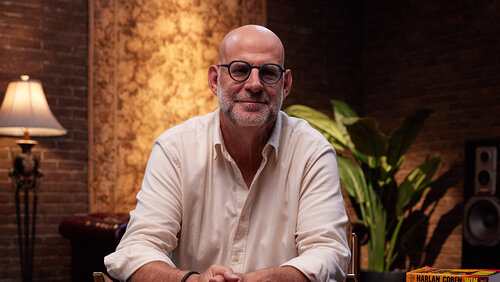
Harlan Coben is the New York Times No.1 bestselling author of more than 36 novels, including The Boy from the Woods, Fool Me Once, Tell No One and the celebrated Myron Bolitar series. Published in 46 languages around the globe, his thrillers have captured the world's attention, with many adapted into hit television dramas, including I Will Find You, The Stranger and Stay Close. Harlan was the first author to win the grand triple crown of crime fiction – the Edgar Award, Shamus Award and Anthony Award. He was also the first writer in more than a decade invited to write fiction for The New York Times op-ed page, and his columns frequently appear in Parade magazine and Bloomberg View.
Common Questions
-
How can I start writing my first thriller?
Begin with a strong idea drawn from personal experience, news or observation, then blend it with compelling characters to drive the plot.
-
What tips does Harlan Coben give for beating writer's block?
Keep your mind open, jot down every idea, and combine smaller sparks into bigger concepts rather than waiting for a 'perfect' idea.
-
How do I come up with story ideas for a novel?
Draw from your own life, news stories, overheard conversations or striking images, then ask 'What if?' to expand them into plots.
-
How should I start the first chapter of my book?
Drop readers straight into the action or intrigue—start with a compelling sentence or image that raises immediate questions.
-
What makes a good thriller plot?
A great thriller combines high stakes, well-paced suspense, and characters whose choices drive the twists and turns of the story.
-
How do I structure a creative writing project?
Think of plot, character, dialogue, and setting as interconnected elements that evolve together rather than separate steps.